
A wall mounted kitchen faucet can solve real layout problems in compact apartments, hospitality prep counters, narrow galley kitchens, and design-led kitchen projects. By moving the faucet body off the deck, buyers can free up counter space and create a cleaner sink zone, but the rough-in must be planned before wall finishes, cabinets, and countertops are locked.
For FaucetTaps project buyers, this category should be compared with standard kitchen sink faucet options, pull-down faucets, bar faucets, and sensor models. The right choice depends on wall access, sink depth, backsplash material, maintenance expectations, and whether the room will be repeated across many units.
Where Wall Mounted Kitchen Faucets Work Best
Wall-mounted formats are useful when counter depth is limited or when the designer wants an uncluttered sink deck. They can work in studio apartments, boutique hotel kitchenettes, coffee bars, prep sinks, and restaurant-inspired residential kitchens. The faucet becomes part of the wall elevation, so its position needs the same attention as lighting, tile lines, shelving, and cabinet handles.
They are not a last-minute substitute for a deck-mounted faucet. Once plumbing is hidden inside the wall, changes become expensive. Procurement teams should confirm the faucet body, spout reach, wall thickness, service access, and finish before construction drawings are released.
Confirm Rough-In Height and Spout Reach
The most important specification is the relationship between wall outlet height, sink rim, bowl depth, and spout reach. If the outlet is too high, splashing may increase. If it is too low, tall pots and containers become difficult to fill. If the spout reach is too short, water lands near the back of the basin; if it is too long, it can feel awkward in a shallow sink.
For multi-unit projects, build a simple elevation drawing that shows countertop height, sink bowl centerline, faucet outlet height, spout projection, backsplash thickness, and any shelf or window above the sink. This helps installers repeat the same detail without guessing.
Plan Access for Installation and Future Service
Wall-mounted kitchen faucets look clean because the plumbing is concealed, but buyers should still plan how the faucet will be installed and serviced. Ask whether the valve body, connections, and replacement parts can be accessed without damaging tile or stone. If the faucet is used in a rental or hospitality project, maintenance access matters as much as the appearance.
When a project includes compact beverage counters, a bar faucet selection may be simpler than a wall-mounted format. When the main kitchen needs stronger rinsing function, buyers may compare a pull-down kitchen faucet. The specification should match the use case rather than force one product style into every sink zone.
Match Finish With the Full Kitchen Package
Because the faucet sits on the wall, its finish is highly visible against tile, stone, plaster, or wood panels. Chrome is practical and easy to clean. Brushed nickel and stainless-look finishes suit many apartment projects. Matte black can create a strong line against pale tile. Champagne bronze can feel warm in boutique hospitality and villa kitchens, especially when paired with matching drains, soap dispensers, cabinet pulls, and lighting.
Before confirming the finish, compare the faucet with the sink drain, kitchen accessories, bathroom faucets, and any visible hardware used across the same project. A finish schedule helps overseas buyers avoid mixed tones after installation.
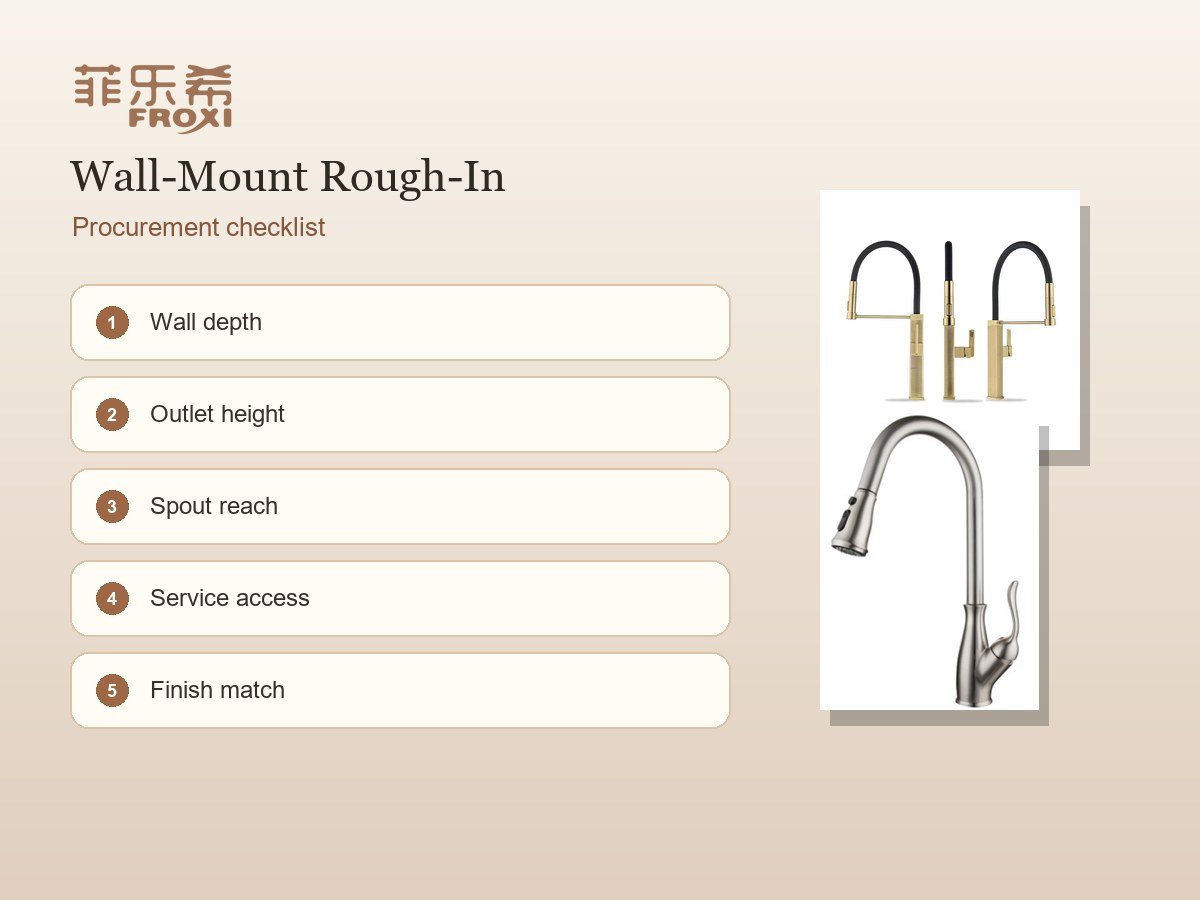
Wall Mounted Kitchen Faucet Rough-In Checklist
Before ordering, confirm wall depth, outlet spacing, hot and cold supply location, spout reach, outlet height, sink centerline, backsplash material, service access, finish code, installation drawing, spare parts, and packaging requirements. For general plumbing coordination, project teams can reference the International Plumbing Code overview while checking local requirements with their installer.
Recommended FaucetTaps Category Path
Start with the FaucetTaps kitchen collection, compare kitchen faucet categories, then decide whether the sink needs a wall-mounted format, standard sink faucet, pull-down model, sensor faucet, or bar faucet. For rough-in review, contact the FaucetTaps team with sink drawings, wall details, finish targets, and project quantity.
Conclusion
A wall mounted kitchen faucet can make compact and design-led kitchens cleaner, but only when rough-in planning is handled early. Buyers who confirm wall access, spout reach, sink fit, finish matching, and service needs can create a kitchen faucet specification that looks refined and installs predictably.