
Kitchen sensor faucet selection is becoming more practical for hotels, serviced apartments, office pantries, shared kitchens, and hygiene-focused residential projects. For overseas buyers and importers, the decision is not only about touchless operation. A reliable specification also covers sensor range, power source, deck space, water pressure, finish matching, spare parts, and after-sales support.
FaucetTaps buyers can compare kitchen sensor faucet options with pull-down faucets, standard kitchen sink faucets, bar faucets, and coordinated kitchen accessories before confirming a project package.
Why Touchless Operation Matters in Shared Kitchens
Shared kitchens see repeated hand washing, food preparation, cup rinsing, and cleaning. A sensor faucet reduces direct handle contact, which can help housekeeping teams, tenants, and guests keep the sink area cleaner. In hospitality and apartment projects, touchless operation can also make the kitchen feel more modern without requiring a complicated user experience.
For procurement teams, the key is to choose models that remain easy to service. A touchless feature should reduce friction, not create a maintenance burden for property managers or wholesalers.
Confirm Sensor Range, Power Source, and Override
Before placing an order, ask how the sensor range is adjusted and whether the faucet supports battery power, plug-in power, or both. The right answer depends on the room type and the local installation plan. Battery-powered units can simplify retrofits, while hardwired power may be preferred in larger developments where maintenance teams want a consistent setup.
Manual override is also important. Buyers should confirm what happens during battery replacement, sensor service, or temporary power loss. This is especially important for hotel rooms, staff pantries, and rental units where downtime creates service calls.
Match the Faucet to the Sink and Countertop
A kitchen sensor faucet still needs the same physical planning as a standard kitchen faucet. Confirm sink hole diameter, countertop thickness, spout height, spout reach, aerator type, water pressure, and clearance around soap dispensers or filter taps. If the sink is shallow, the flow should be comfortable without splash. If the room uses deep bowls, the spout must still feel proportionate.
Buyers comparing broader kitchen packages can review FaucetTaps kitchen products, kitchen sink faucet categories, and bar faucet options for secondary prep areas.
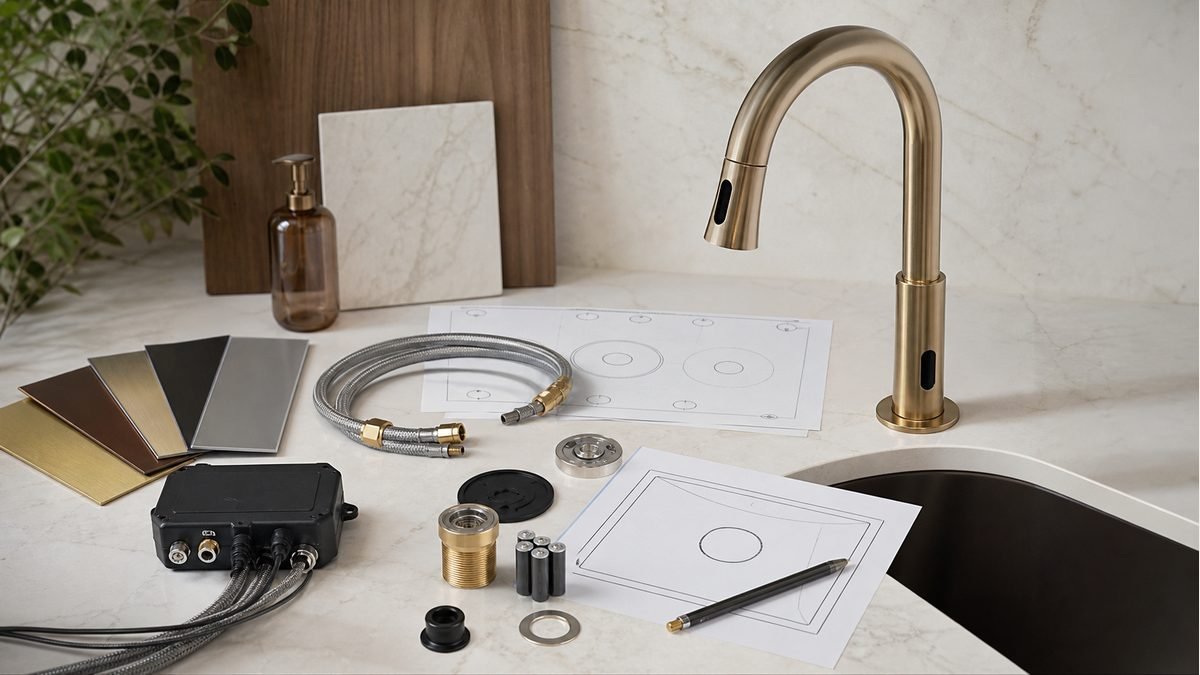
Kitchen Sensor Faucet Specification Checklist
For each model, record sensor range, power type, flow rate, cartridge, aerator, hose length, mounting kit, finish code, packaging method, MOQ, and replacement part availability. For water-efficiency context, buyers can reference EPA WaterSense while confirming local project standards with contractors.
Supplier Questions for Importers and Wholesalers
Ask whether the supplier can provide installation drawings, finish samples, spare sensor modules, cartridge support, packaging customization, and clear troubleshooting notes. For multi-unit projects, request a sample test before committing to full production. The sample should be checked for sensor response, splash control, finish consistency, and ease of cleaning.
Conclusion
A kitchen sensor faucet works best when touchless convenience is supported by correct installation planning and reliable supplier backup. For hotel, apartment, shared kitchen, or wholesale programs, contact the FaucetTaps team with room drawings, finish targets, and quantity expectations for product matching and quotation support.