
Kitchen faucet pre-shipment inspection gives importers, wholesalers, contractors, and project buyers a final opportunity to confirm that approved samples have become consistent production goods. A useful inspection covers appearance, function, dimensions, included fittings, packaging, carton identification, and records—not only whether the faucet looks attractive.
Start with a signed specification and approved sample. Compare production units with the FaucetTaps kitchen faucet collection and the exact model, finish, configuration, and destination-market requirements stated in the purchase order.

Freeze the Inspection Standard Before Production
Define sampling method, acceptable quality limits, critical defects, functional tests, finish tolerances, packaging requirements, and reporting format before the factory books inspection. The checklist should identify the faucet model, finish code, quantity, carton plan, accessories, and any approved deviations. This prevents inspectors from making subjective decisions at the end of production.
Check Shape, Finish, and Moving Parts
Inspect the body, spout, handle, spray head, escutcheon, and visible trim under neutral light. Look for scratches, dents, plating variation, sharp edges, uneven gaps, loose handles, or poor alignment. Move the handle through its full range and rotate the spout. A pull-down spray head should dock securely and change functions cleanly.
For mixed orders, separate kitchen sink faucet models, bar faucets, and special configurations so finish or component differences are not hidden inside an average result.
Verify Dimensions and Functional Performance
Measure overall height, spout reach, base diameter, mounting thread, hose length, and connection size against the approved drawing. Confirm hot and cold markings, cartridge movement, aerator fit, spray selector operation, leakage performance, and any pressure test required by the order. Buyers should also verify the specified flow configuration and destination-market expectations; the EPA WaterSense program provides useful US efficiency context.
Inspect the Complete Installation Set
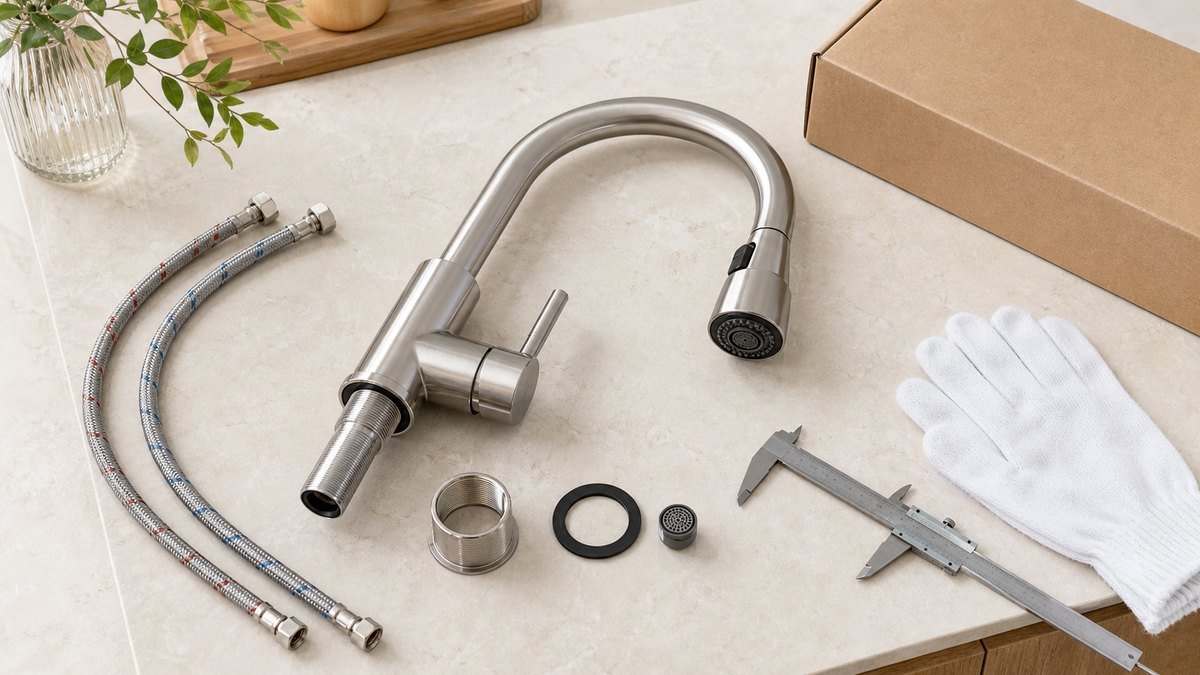
A faucet can pass visually and still fail at site because one small component is missing. Open sampled cartons and count braided supply lines, mounting nuts, gaskets, counterweights, quick connectors, aerators, adapters, instructions, and model-specific accessories. Check that connection sizes and hose lengths match the installation schedule.
For pull-down orders, compare the spray head, hose, and docking components with the relevant models in the kitchen faucet category and the approved spare-parts list.
Review Packaging for Export Handling
Protect finished metal from abrasion, keep hoses from kinking, immobilize heavy parts, and separate accessories so they cannot strike the faucet during transport. Inspect inner boxes, dividers, moisture protection, master cartons, pallet pattern, and carton strength. Any printed label should match the purchase order, model, finish, quantity, and destination requirements.
Record Evidence and Corrective Actions
The final report should include production quantity, sampled quantity, defect classification, measurements, functional-test results, packaging photos, carton counts, and clear disposition. If defects exceed the agreed limit, record rework, reinspection, replacement, or shipment hold in writing rather than relying on verbal approval.
Build Inspection into Supplier Communication
A repeatable kitchen faucet pre-shipment inspection protects the buyer and gives the supplier a clearer target. For an importer, hotel, apartment, or wholesale program, send FaucetTaps your model list, finish standard, packaging needs, and inspection checklist to coordinate a project-ready quotation and quality plan.