
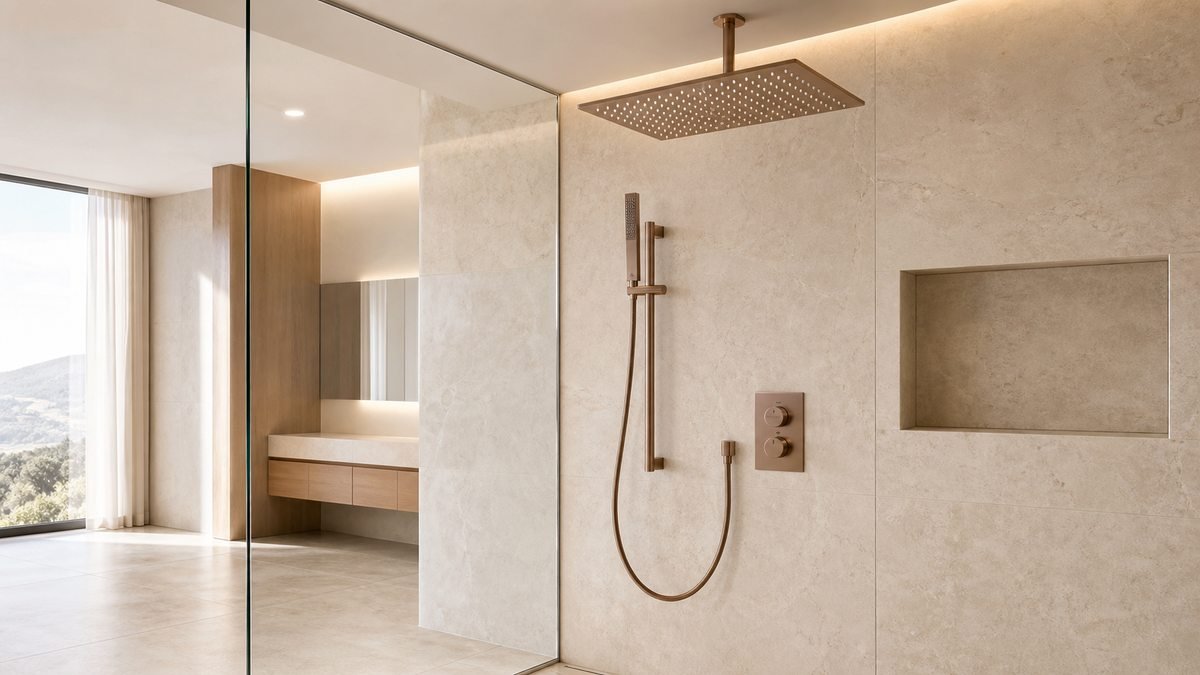
Thermostatic large rain shower planning connects guest comfort with hot-water design, valve performance, outlet flow and site commissioning. A wide overhead shower may look simple after handover, but the specification must control temperature changes while supplying the rain head, hand shower and any additional outlet under real hotel operating conditions.
Begin with the FaucetTaps shower faucet range, then coordinate the selected rain head, thermostatic or compensating valve, flow controls, diverter, hand shower and service access as one assembly.
Confirm the Hot and Cold Design Conditions
Record available static and dynamic pressure, expected pressure imbalance, hot-water storage or generation temperature, distribution losses and simultaneous demand. The valve cannot compensate for every system problem, and a large rain head may expose weak flow that a small outlet does not reveal.
Ask the MEP consultant to identify the intended temperature-control strategy and applicable local requirements. Do not select a valve only from the visible trim. The concealed body, cartridge, flow capacity and intended installation point determine performance.
Match Valve Capacity to the Outlet Combination
List the rain head, hand shower, body sprays if any and whether outlets operate separately or together. Compare the required flow with the valve and diverter capacity at the project’s pressure range. Oversized shower heads and undersized piping can create disappointing coverage even when the trim looks premium.
The wider bathroom faucet collection helps buyers keep basin, tub and shower finishes coordinated while preserving the correct technical package for each room type.
Specify the Correct Temperature-Control Standard
Automatic compensating shower valves may use pressure-balancing, thermostatic or combined principles. The applicable product standard and plumbing code depend on the market and installation. ASSE International lists ASSE 1016 / ASME A112.1016 / CSA B125.16 among the standards covering automatic compensating valves for individual showers and tub/shower combinations. Project teams should confirm the exact current requirement with their responsible consultants and authorities.
Procurement documents should state required certifications, control functions, temperature limit, finish, outlet sequence and service-part expectations rather than using the word “thermostatic” as the complete specification.
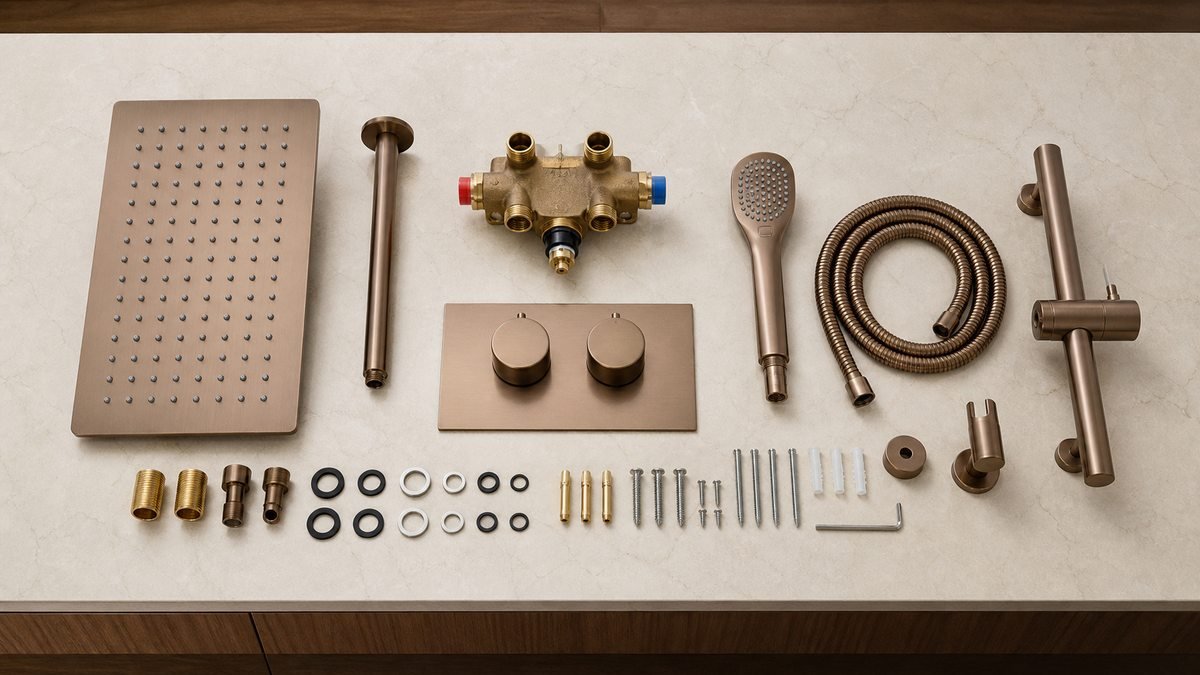
Coordinate Rough-In Depth and Future Access
Confirm wall build-up, waterproofing, tile thickness, valve centerline and permitted rough-in depth before closure. The finished trim must sit flat without forcing the cartridge. Isolation, strainers or service points should remain accessible according to the approved system design.
Use a product reference such as Modern Shower Faucet CZ612026 to discuss the actual configuration, then verify that the selected large rain shower package uses compatible valve and outlet components.
Commission Temperature and Flow in a Real Room
Flush the system, verify hot and cold orientation and test the shower after the building’s hot-water system is stable. Measure delivered temperature using calibrated site equipment, set the limit stop according to the approved design and test the response to pressure changes. Operate each outlet alone and in every permitted combination.
Record the final setting, inlet conditions, room number, valve model and observed outlet performance. The earlier FaucetTaps guide to repeatable hotel rain shower experience provides additional context for matching guest-room outcomes across a project.
Plan Handover and Periodic Checks
Facilities teams need cartridge references, cleaning guidance, approved spare parts and a method for checking temperature after hot-water-system changes. A shower can drift from its original commissioning condition when incoming temperatures, pressure or components change. The maintenance plan should state when the control setting is rechecked.
Request a Thermostatic Shower Coordination Proposal
Send FaucetTaps the pressure data, hot-water design, rain-head size, outlet combination, wall build-up, finish, room types and quantities. A coordinated proposal helps buyers align large rain shower performance, thermostatic control and service requirements before bulk ordering.