
Bar faucet specification is useful for coffee bars, pantry sinks, hospitality suites, apartment lounges, showroom islands, and secondary prep stations. These areas do not need the same faucet size as a main kitchen sink, but they still need reliable water control, suitable reach, finish consistency, and spare-part support.
For overseas buyers and project contractors, a good secondary-sink plan starts by separating the main kitchen faucet from the smaller bar or pantry faucet. FaucetTaps buyers can compare bar faucet options with broader kitchen faucet categories before confirming a project package.
Where Bar Faucets Fit Best
Bar faucets are commonly used at beverage counters, coffee stations, hospitality suite pantries, compact apartment lounges, office tea rooms, and prep sinks. The smaller scale makes the sink area feel proportional, while still giving users a dedicated place for cup rinsing, filtered water access, or light cleaning.
For hotel and apartment projects, this can improve convenience without over-specifying the room. A carefully selected bar faucet can also help wholesalers build a differentiated kitchen collection for secondary-use spaces.
Check Sink Size, Spout Reach, and Counter Space
A bar faucet should match the sink bowl and nearby equipment. If the spout is too tall, it can look awkward or splash in a shallow sink. If the reach is too short, users may struggle to rinse cups or small trays. Counter space is also important when the same zone includes a coffee machine, soap dispenser, filter tap, or accessories.
Before ordering, confirm sink dimensions, hole diameter, deck thickness, water pressure, and clearance around cabinets or shelves. For compact counters, a clean single-handle design is often easier to use and maintain.
Finish Coordination for Hospitality and Apartments
Secondary-sink faucets should not look like afterthoughts. Chrome, brushed nickel, matte black, brushed gold, and champagne bronze can all work when the finish is coordinated with the main kitchen sink faucet, soap dispenser, cabinet hardware, and nearby bathroom fixtures.
Project buyers should request finish samples or finish codes when the bar faucet is part of a multi-room package. Consistency reduces installation disputes and gives the finished room a more intentional look.
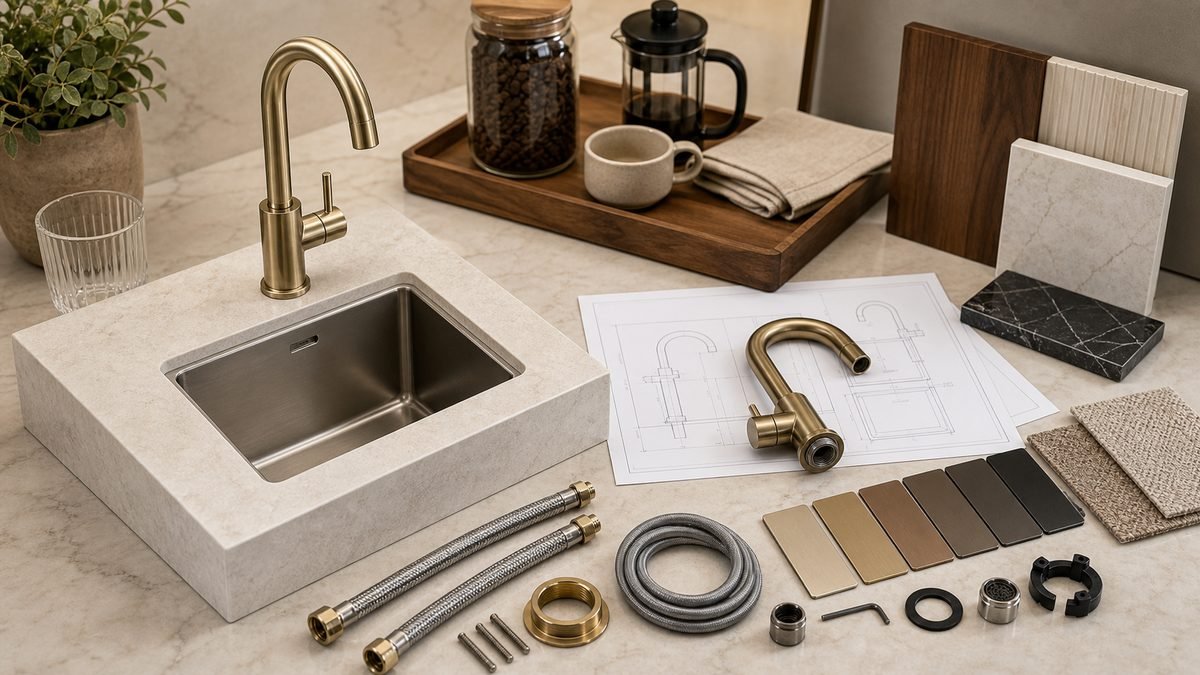
Bar Faucet Specification Checklist
Before confirming a bar faucet order, record sink size, spout height, spout reach, handle direction, installation hole, water pressure, finish code, cartridge type, aerator, mounting hardware, packaging method, MOQ, and spare-part availability. For general water-efficiency context, buyers can reference EPA WaterSense while following local project requirements.
Supplier Questions for Importers and Contractors
Ask whether the supplier can provide drawings, finish samples, carton labels, installation notes, replacement aerators, cartridges, and project packaging support. For multi-unit projects, confirm whether the bar faucet can be shipped with matching kitchen faucets and accessories under one room schedule.
Recommended FaucetTaps Category Path
Start with FaucetTaps kitchen selections, compare bar faucets for secondary sinks, and then match the finish with kitchen sink faucets, soap dispensers, and bathroom fixtures. For coffee bars, pantry sinks, or hospitality suites, contact the FaucetTaps team with layout drawings and quantity needs.
Conclusion
Bar faucet specification works best when buyers treat secondary sinks as real project zones, not leftovers from the main kitchen. With the right scale, reach, finish, and supplier support, bar faucets can improve hospitality suites, apartments, office pantries, and wholesale kitchen programs.