

Kitchen sensor faucet power planning should be completed before casework, electrical points and sink services are fixed. For hotels, serviced apartments, shared kitchens and light commercial spaces, the faucet body is only one part of the system. Buyers must also coordinate the sensor range, power source, solenoid valve, shut-off access, hose routing and commissioning method.
Start with the real FaucetTaps kitchen sensor faucet category, then compare the proposed control package with sink dimensions, cabinet layout, water connections and the project maintenance plan.
Choose the Power Strategy Before Cabinet Drawings Close
Confirm whether the approved model uses batteries, mains power or a defined backup arrangement. Record voltage, transformer location, battery type, expected access route and any local electrical requirements. A hidden control box still needs safe, dry and tool-friendly service access.
Coordinate Sensor Range With the Real Sink
Reflective bowls, deep sinks, dark finishes and nearby objects can influence user experience. Test hand positions, pan clearance and common preparation tasks. The broader FaucetTaps kitchen faucet collection helps project teams compare sensor and conventional control options for different room types.
Keep Valves, Hoses and Power Components Serviceable
Place the solenoid, isolation valves, filters and power module where technicians can reach them without removing the sink or damaging cabinetry. Protect cables and hoses from drawer runners, waste bins, sharp edges and standing water. The under-sink zone should remain readable after all appliances and dispensers are installed.
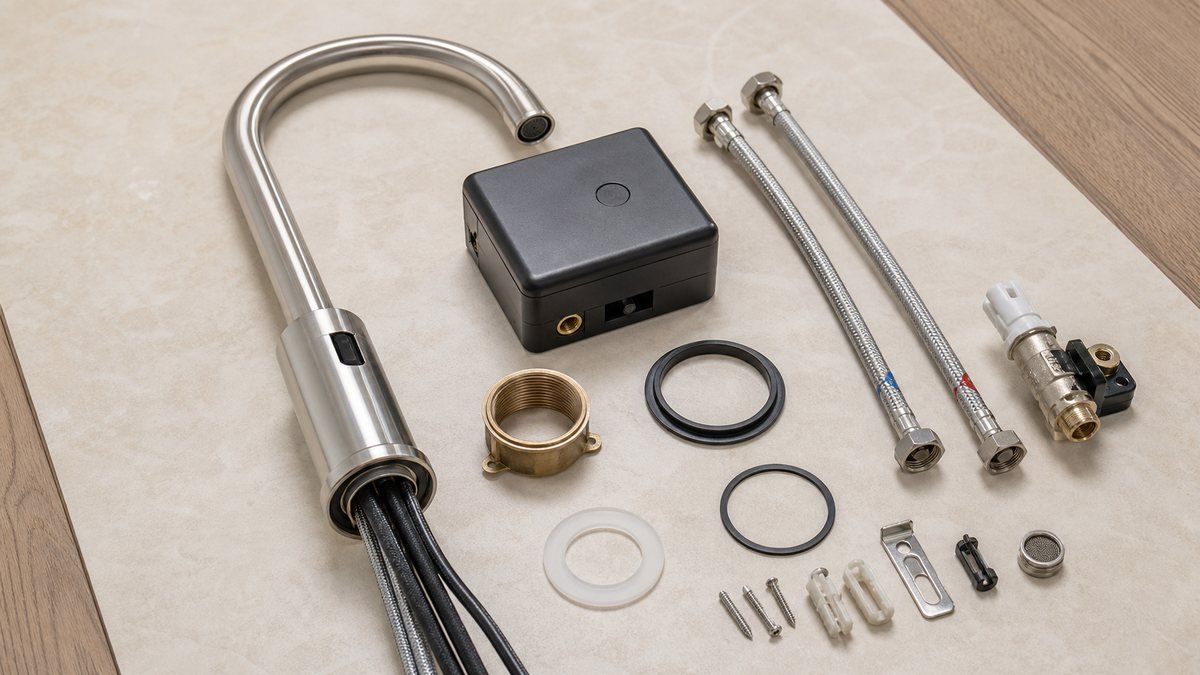
Approve the Control and Service Zone
Build one complete mock-up using the final sink, faucet, control box, hoses, valves, power supply and cabinet. A model such as FaucetTaps CZ435002 should be approved by its exact technical package rather than by silhouette alone. The EPA guide to lead-free certification marks also gives buyers useful context on certification requirements for drinking-water plumbing components; confirm the standards required for the destination market and exact product.
Commission Every Operating Mode
Flush the lines as required, verify hot and cold connections, set the detection range, test repeated activation and confirm shut-off timing. Simulate low battery or power interruption where relevant. Record the final settings, installed model, control-module position and spare-part references for the facilities team.
Plan Spares Around the Installed System
Prepare a controlled list of batteries, solenoids, sensor components, filters, seals and hoses for each project phase. Use the kitchen sink faucet range to keep room schedules aligned when a project mixes touchless and manual fixtures.
Request a Sensor Faucet Coordination Review
Send FaucetTaps the sink schedule, cabinet sections, power preference, water-pressure data, control location, finish and quantities. A coordinated proposal helps buyers lock the faucet, power and service requirements before installation begins.