
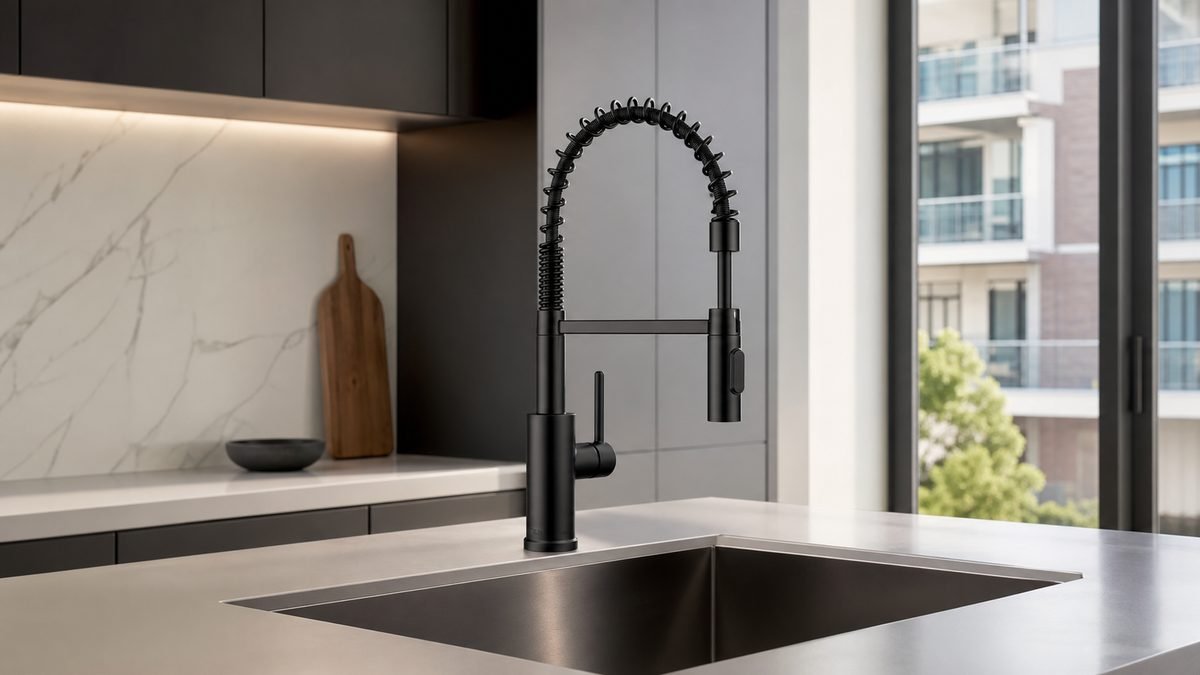
Pull-Down Kitchen Faucet Mounting Stability is a purchasing and coordination decision, not a last-minute site choice. For B2B buyers, the most reliable outcome comes from combining drawings, mock-up approval, installation checks and a clear service handover before bulk supply.
Start with the project conditions
The faucet body, sink deck and stabilizer must be assessed as one assembly. Record counter thickness, sink gauge, reinforcement plate and fixing torque before bulk installation begins.
Bring the architect, MEP coordinator, contractor and purchasing team to the same schedule. List the room type, finished dimensions, water connection, surface material, finish code, required quantities and delivery sequence. This gives the supplier a usable specification instead of a collection of separate assumptions.
Approve the complete assembly
During mock-up approval, cycle the spray hose through its full travel below the sink. Confirm that weights, shut-off valves and waste connections cannot rub or trap the hose.
Use the signed sample as the reference for production inspection. It should state the finish, installation hardware, key dimensions, included accessories and any site-specific allowances. For water-efficiency context, project teams can also review the EPA WaterSense programme alongside local code requirements.
Build service into the purchase order
A unit-by-unit inspection record is worth more than a generic installation note: it identifies loose fixing hardware before residents report movement at the spout.
Useful FaucetTaps references
- pull-down kitchen faucet range
- kitchen faucet installation guide
- counterweight clearance planning
- kitchen faucet collection
Request a coordinated proposal
Send FaucetTaps your drawings, finish schedule, quantities and delivery programme. Our team can help align product selection, sample approval, packaging and service spares for the project.