
Bathroom sink faucet accessible design is not only about public compliance. Hotels, serviced apartments, senior living projects, family villas, and multi-generational homes all need faucets that are easy to reach, easy to operate, and simple to maintain. A beautiful bathroom can still fail the user if the basin faucet is too low, too stiff, or poorly positioned.
FaucetTaps bathroom buyers can build a better specification by connecting bathroom sink faucet categories, bathroom sensor faucet options, large rain shower systems, freestanding tub faucets, drains, and matching accessories early in the project.
Start With User Movement, Not Only Product Style
Accessible and multi-generational bathrooms are used by people with different heights, strength levels, and routines. Some users need seated access. Some need a handle that is easy to control with limited grip. Some prefer sensor operation because it reduces twisting and touching. The faucet should support these needs without making the room look institutional.
For hotels and apartments, buyers should also think about housekeeping, replacement parts, and how easily guests can understand the faucet without instructions.
Choose Handle, Spout, and Basin Layout Together
A lever handle is often easier to use than a small knob, but its location matters. Side handles may interfere with tight vanity layouts. Top handles can be convenient when the basin is shallow. Wall-mounted faucets can clear counter space, but they require accurate rough-in dimensions and a basin shape that controls splash.
Spout reach should place water comfortably inside the basin. If the reach is too short, users lean forward. If it is too long, splashing increases. Faucet height should allow hand washing without making the vanity area feel oversized.
When a Bathroom Sensor Faucet Helps
A bathroom sensor faucet can work well in public washrooms, healthcare-adjacent spaces, offices, gyms, and accessible hospitality rooms. It reduces hand contact and can simplify use for guests who find small handles difficult.
Before using sensor faucets across a project, confirm power source, sensor range, manual override, water pressure, and maintenance access. The goal is reliable everyday operation, not a feature that creates extra service calls.
Coordinate Shower and Tub Areas
The sink faucet is only one part of the accessible bathroom. Shower controls should be reachable and clear. A shower faucet package may need a hand shower, large rain shower head, mixer, and holder arranged for different users. Premium rooms or villas may also need a freestanding tub faucet, but tub access should be reviewed carefully for the intended user group.
Finish matching still matters. Accessible does not mean plain. Chrome, brushed nickel, matte black, and warm metallic finishes can all work when the shape, grip, and maintenance plan are appropriate.
Accessible Bathroom Faucet Checklist
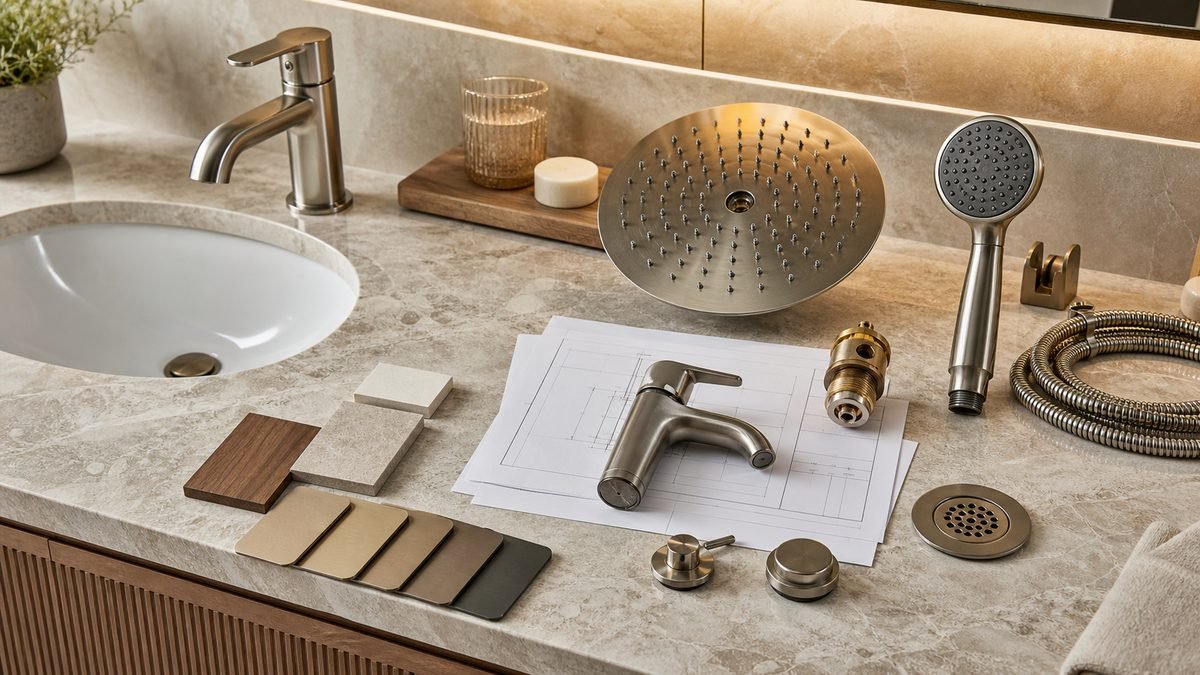
Before ordering, confirm user group, basin height, spout reach, handle type, sensor requirement, water pressure, cleaning guidance, replacement cartridge, drain compatibility, and installation drawings. For general accessibility context, project teams can review the ADA design standards while confirming local code requirements with architects and contractors.
Recommended FaucetTaps Category Path
Begin with FaucetTaps bathroom selections, compare bathroom sink faucets and sensor faucets, then build shower and tub areas around the same user profile. For accessible hotel rooms, public washrooms, or senior-friendly projects, contact the FaucetTaps team with room drawings and finish targets.
Conclusion
Bathroom sink faucet accessible design works best when buyers plan reach, operation, basin fit, sensor use, shower controls, and maintenance together. The right FaucetTaps bathroom package can look premium while still supporting real users across hotels, apartments, and multi-generational homes.