
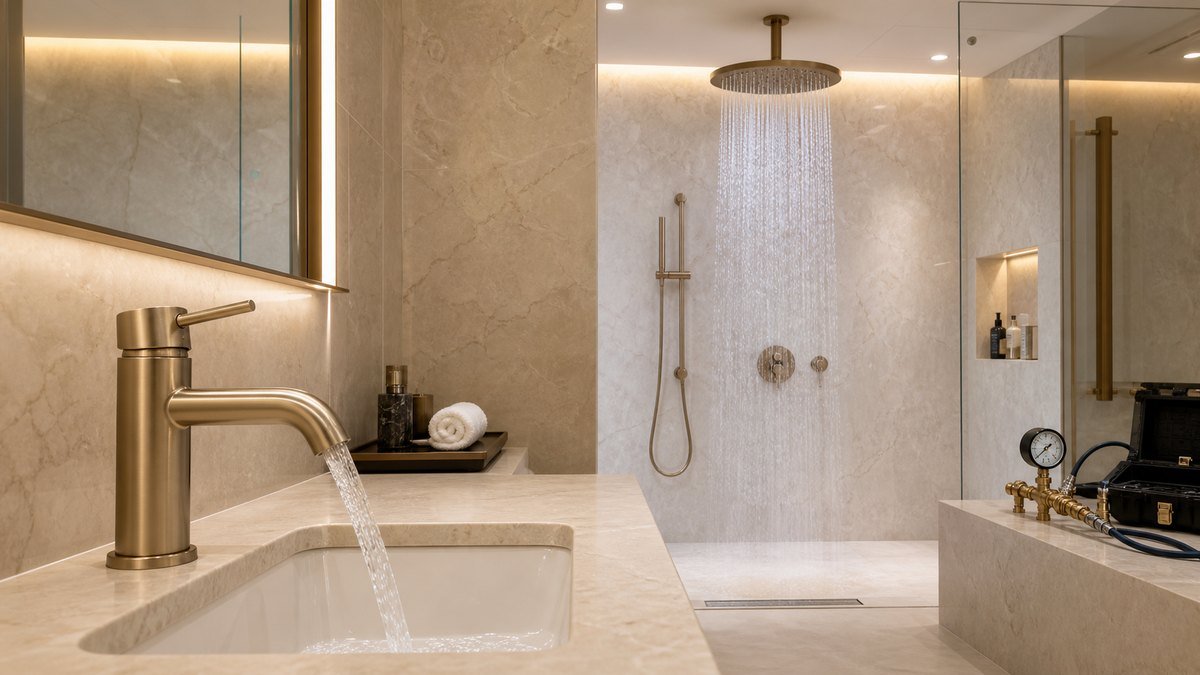
Rain shower pressure planning is essential when a hotel, villa, or apartment package combines a large overhead shower, hand shower, basin faucet, tub outlet, concealed mixer, and floor drain. The visible trim may be premium, but guest experience depends on pipe sizing, valve capacity, available pressure, temperature stability, and drainage.
Review the FaucetTaps bathroom faucet range as a system. Record which outlets may run together and distinguish static pressure from the dynamic pressure available while water is flowing.
Define the Intended Shower Experience
A large rain shower should provide even coverage without feeling weak or consuming more water than the project can support. Confirm shower-head size, outlet count, target flow, ceiling or wall mounting, drop length, and whether the hand shower or tub outlet may operate at the same time. A larger faceplate does not automatically deliver a better result if supply volume is limited.
The FaucetTaps shower faucet category includes options that should be matched to the planned valve and outlet sequence. Confirm the supplier’s recommended pressure and flow conditions before approving the visible set.
Check Dynamic Pressure at the Furthest Room
Measure pressure while the shower operates, not only when all outlets are closed. Test representative rooms near and far from the riser, on high and low floors, and during expected peak demand. Pressure-reducing valves, pumps, pipe friction, filters, thermostatic valves, and elevation can all change the result.
Where the bathroom package includes a basin faucet, compare its behavior with the bathroom sink faucet range. Excess pressure can cause splash at a shallow basin even while a large shower still needs adequate volume.
Confirm Valve and Pipe Capacity
Check the concealed valve inlet size, outlet capacity, diverter logic, cartridge range, check valves, and simultaneous-use limits. Pipe diameter and route should support the target flow without unnecessary pressure loss. A model such as the FaucetTaps Modern Shower Faucet CZ612026 still requires coordination with the project’s hot-water plant, distribution design, and rough-in dimensions.
Match Flow With Drainage and Waterproofing
The shower drain must remove water faster than the maximum combined outlet flow. Test the finished falls, drain grate, waterproofing transitions, curb or screen detail, and splash zone. A large shower can reveal drainage problems that remain hidden during a short basin test.
For general efficiency guidance, project teams can consult EPA WaterSense showerhead information while confirming local code, accessibility, and hot-water requirements with the responsible consultants.
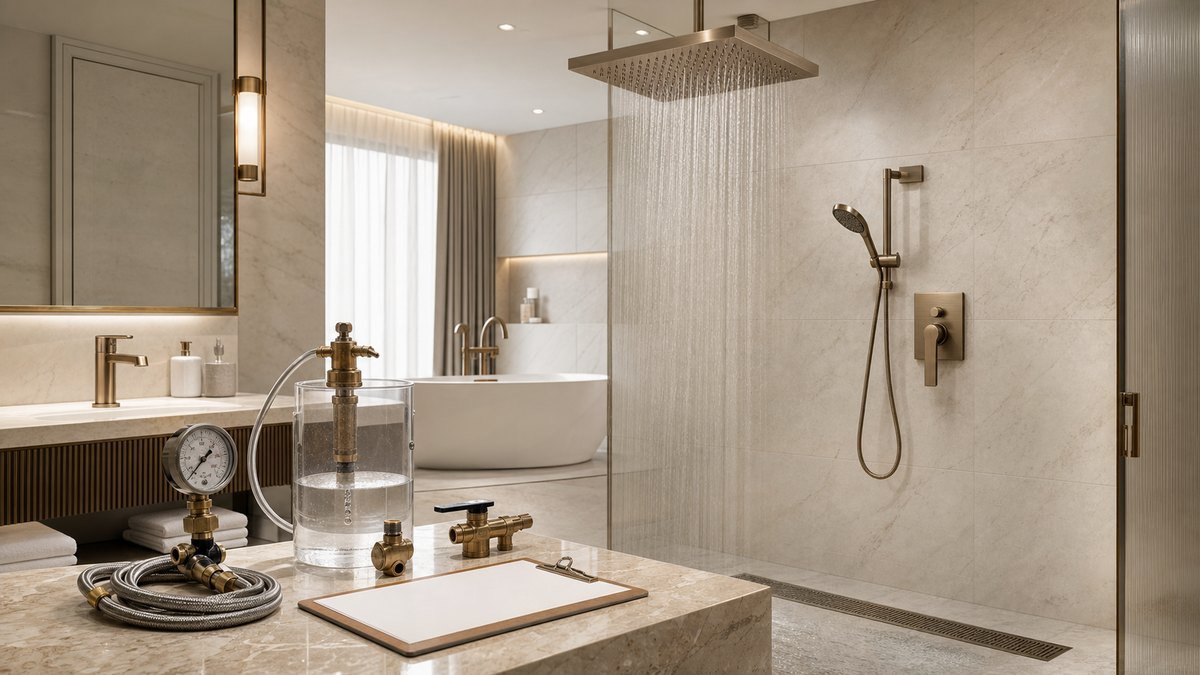
Commission One Complete Bathroom
Before mass installation, run the basin faucet, rain shower, hand shower, and tub outlet at realistic demand. Record dynamic pressure, flow, temperature stability, diverter sequence, drainage, noise, spray coverage, leak results, and guest-facing controls. Clean strainers and flush debris before deciding that a valve or shower head is underperforming.
Specify a Balanced Bathroom Package
The final schedule should list every faucet, shower outlet, valve, hose, holder, drain, finish, pressure range, and replacement component. For project matching, send FaucetTaps the riser information, room quantities, outlet combinations, pressure data, finish target, and bathroom drawings. A coordinated package makes large rain shower performance easier to verify and repeat.