

Bathroom accessory cleaning chemical compatibility should be approved before a hotel rolls one housekeeping method across hundreds of rooms. Basin drains, soap dispensers, shower hoses and towel hardware combine plated metal, coated finishes, rubber seals and plastic components. A cleaner that is acceptable on stone or ceramic can still dull metal, stain a coating or weaken a dispenser pump.
Start with the real FaucetTaps bathroom accessories range and prepare a finish-and-material register. Link every visible item to its model, finish, substrate, replaceable parts and supplier care instructions.
Map Products to Actual Housekeeping Chemicals
Ask the operator for every cleaner, disinfectant, descaler and polish used in guest rooms. Record dilution, application method, dwell time, rinse requirement and frequency. “Bathroom cleaner” is too vague for a compatibility review because concentrated and ready-to-use products can behave differently.
Include accidental exposures such as undiluted concentrate, overspray from glass cleaner and residue left under a wet cloth. Review both routine daily cleaning and periodic deep-clean procedures.
Separate Decorative Finishes From Wetted Components
A visible towel rail mainly faces surface exposure, while a basin drain, dispenser pump and shower hose also contact water, soap and internal residues. Review the real FaucetTaps basin drain category and identify seals, threads and tailpieces that require functional care as well as finish protection.
A reference such as Bathroom Basin Drain CZ18101 should be confirmed against the selected basin, overflow and finish. The project care sheet must name the exact approved product rather than relying on a generic drain photograph.
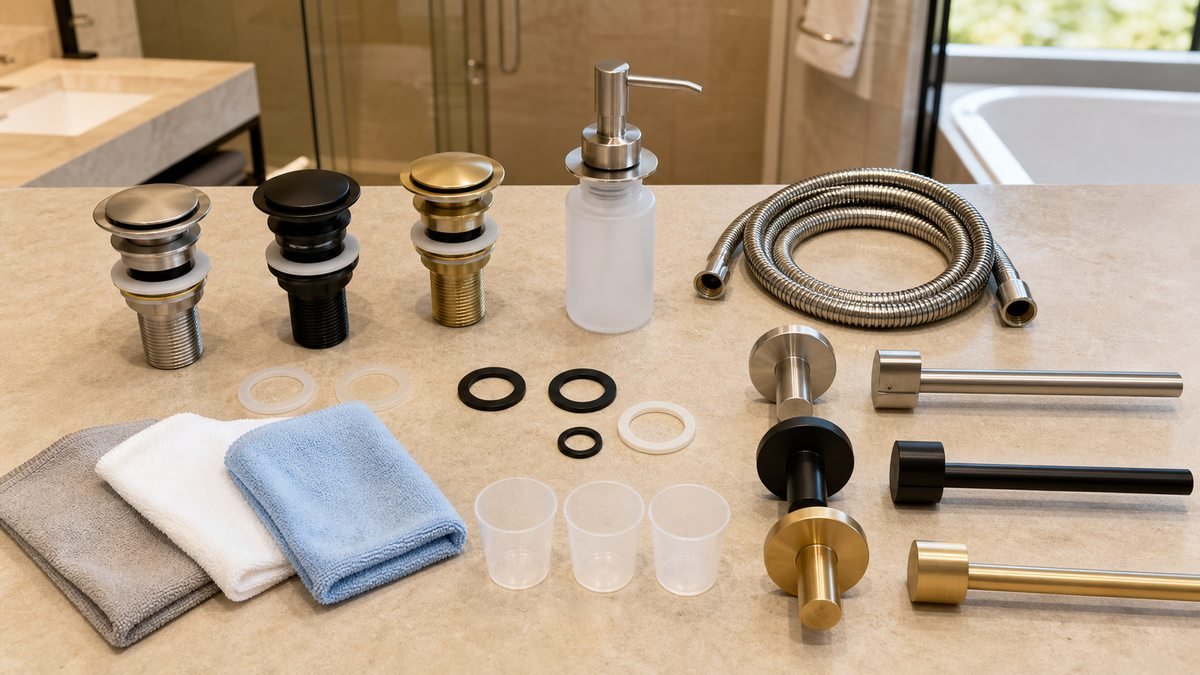
Run a Controlled Sample Test
Use production-intent drains, dispenser components, hose fittings and towel-hardware samples. The supporting image shows a practical inspection set with several finishes, gaskets, cloths and blank test cups. Apply the actual housekeeping products at their documented dilution and dwell time.
Inspect immediately after rinsing and again after the sample dries. Look for colour change, clouding, spotting, pitting, coating lift, stiff seals, cracked plastic and changes to pump action. Repeat the cycle enough times to represent real use rather than one brief exposure.
Control Abrasion and Tool Choice
Chemistry is only one variable. Abrasive pads, hard brushes and dirty cloths can scratch a finish even when the liquid cleaner is compatible. Approve cloth type, brush stiffness and application pressure with the chemical and hardware sample.
Do not use metal tools to clear a drain cover or scrape deposits from plated trim. Provide the correct removable insert, service key or soft cleaning tool in the housekeeping and maintenance kit.
Separate cloths used on metal accessories from those used on grout, stone or toilet ceramics. Grit transferred from another surface can create fine directional scratches that look like a coating defect. Colour-coded cloths may be useful, provided the operator documents their use clearly.
Coordinate Finish Batches and Approved Masters
Retain one approved cleaned sample beside the original master. The FaucetTaps guide to bathroom accessory finish batch control helps teams compare phased deliveries without confusing normal finish variation with chemical damage.
When several accessories are seen together, use the model-apartment accessory coordination guide to approve the complete visual set. Repeat compatibility testing if the finish, coating process or chemical program changes.
Create Clear Housekeeping and Maintenance Instructions
Issue a room-facing care matrix that identifies approved product, dilution, cloth, dwell time, rinse step and prohibited practices. Keep the full chemical names and safety instructions in the operator’s controlled system rather than placing unverified labels on decorative hardware.
For U.S. procurement teams evaluating cleaning products, the official EPA Safer Choice program provides information about products meeting its criteria. A program label does not replace material-specific compatibility testing or the accessory supplier’s instructions.
Train staff with the actual installed accessories. Demonstrate how to rinse around a drain, refill a dispenser without flooding the deck, wipe a flexible hose and clean behind towel brackets. A short observed trial catches misunderstandings that a written sheet may miss.
Plan Replacement Parts and Incident Response
Stock dispenser pumps, drain seals, hose washers and visible fixing covers under exact part references. If damage appears, quarantine the chemical and affected batch, photograph the condition and compare it with the approved samples before replacing hardware across the property.
Record the room, product, finish, cleaning solution, dilution, dwell time and cloth used. That evidence helps separate isolated misuse from a repeatable material issue and gives the supplier enough information to recommend a safe corrective action.
Review the compatibility plan whenever housekeeping changes supplier, concentration or application equipment. The accessories may be unchanged, but the exposure has changed and should be re-approved on retained samples before full deployment.
Send FaucetTaps your accessory schedule, finish samples, cleaning products, housekeeping method, room quantities and replacement-part plan. Our team can discuss bathroom accessory cleaning chemical compatibility before project rollout.