
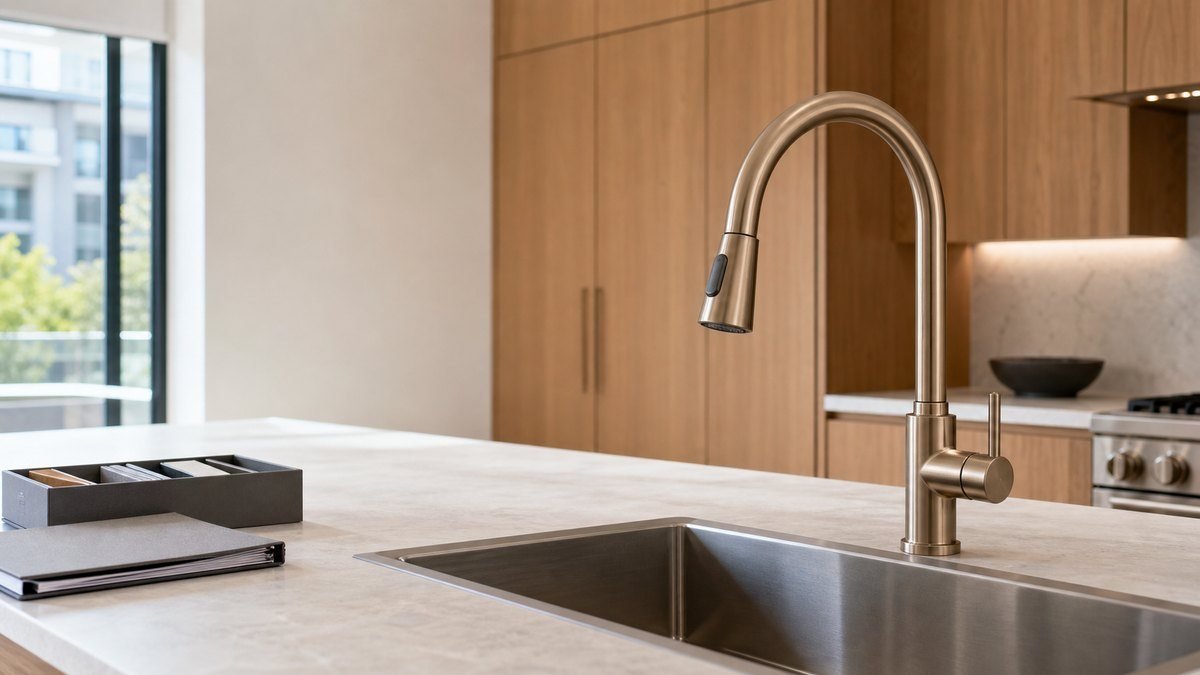
A controlled kitchen faucet water-line connection specification prevents a common import problem: a correct-looking faucet reaches site with hoses, threads or adapters that do not match the local shutoff valves. The result is not merely an extra fitting. Installers may lose time, substitute unapproved components, strain a hose or create a future maintenance mismatch across hundreds of kitchens.
Start with the real FaucetTaps kitchen faucet collection, then attach a connection schedule to the commercial quotation. The schedule should identify the destination, faucet model, hot and cold inlet arrangement, hose length, end connection, shutoff interface and any approved adapter.
Record the Destination Interface Before Sampling
Ask the project plumbing consultant or importer to confirm the expected thread standard, nominal size and sealing method at the shutoff. A label such as “1/2 inch” is not sufficient because nominal descriptions do not guarantee that thread form, pitch or sealing face will mate. Record whether the connection seals on a flat washer, cone, compression surface or approved thread-sealing arrangement.
Compare the planned model with a real reference such as Modern Kitchen Sink Faucet CZ811202, but approve the exact hose and connector package quoted for the destination. Product appearance alone cannot confirm the under-sink interface.
Freeze the Under-Sink Connection Schedule
For every model, list hot and cold hose length, hose construction, faucet-end connection, valve-end connection, included washers and approved adapter part numbers. Confirm whether the hose can reach the shutoff without tension, twisting, a sharp bend or contact with a drawer, waste disposer or cleaning-product shelf.
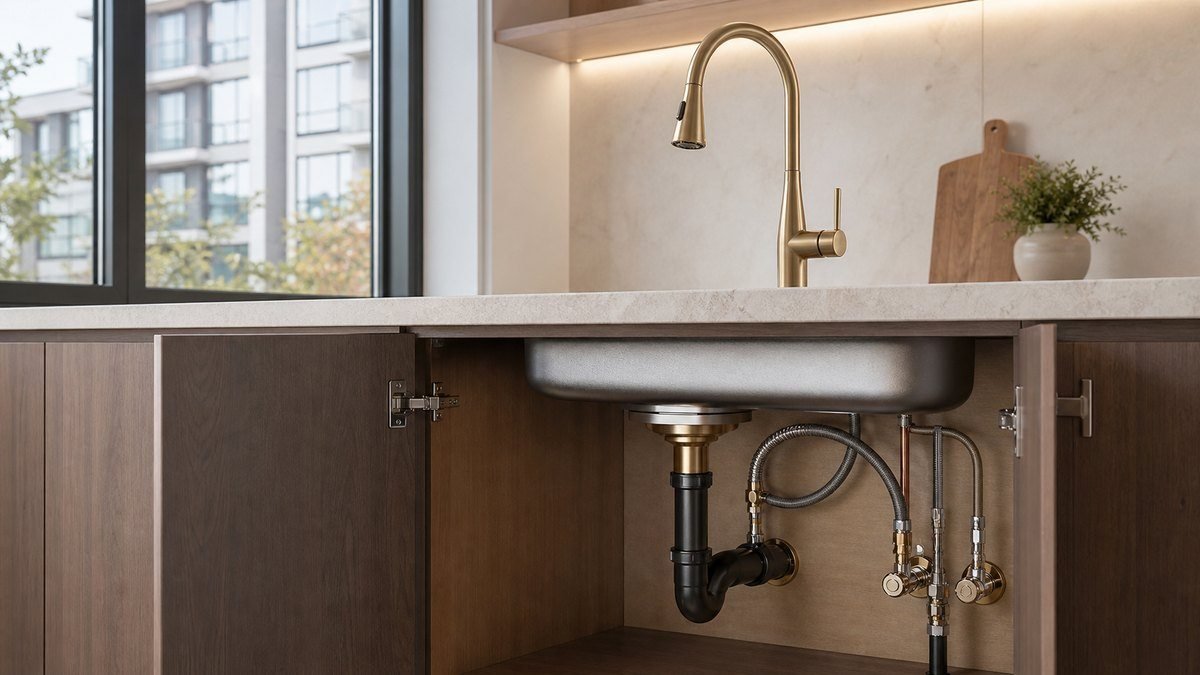
The support image illustrates why the service zone matters: faucet hoses, shutoffs and the waste connection must coexist inside one cabinet. Coordinate this zone with the sink depth, cabinet rails, pull-out bins and drain route before bulk release.
Standardize Shutoff Position and Service Access
Place hot and cold shutoffs where an installer can tighten and later isolate them without removing fixed joinery. Avoid positions that force the supply hose across the trap or create a tight loop beneath the faucet shank. If several apartment or hotel kitchen types use different cabinets, issue a room-type matrix rather than assuming one hose length fits every condition.
The earlier FaucetTaps guide to multi-unit kitchen faucet replacement explains how standardized access and spare records reduce portfolio disruption. Apply the same logic during first installation.
Approve the Complete Sample, Not Only the Faucet Body
The approval sample should include the production hose set, seals, mounting hardware and any adapter in its proposed packaging. Install it on the actual sink and shutoff arrangement. Open and close both valves, pressurize the connection, operate the faucet through its full movement and inspect every joint after the assembly has remained under pressure.
Mark the approved hose and adapter references in the sample report. If the supplier later changes a connector, washer material or hose source, the change should be reviewed against the approved interface before shipment.
Check Potable-Water Documentation by Market
Documentation requirements vary by destination and component. Buyers can consult the official NSF certified plumbing product listings when a project requires relevant listed supply fittings or drinking-water components. Confirm the applicable local standard, scope and marking rather than treating one certificate as universal evidence.
Control Packing, Receiving and Replacement Parts
Protect hose ends and threads from impact and contamination. Pack loose adapters so they cannot scratch the faucet finish or disappear inside the carton. Receiving teams should sample the hose count, length, end connection, seals and labels against the approved schedule before installers distribute units to rooms.
Keep replacement hoses and adapters under their own service part numbers. A facilities team should be able to identify the correct connection set from the installed faucet model and room type without dismantling another unit for comparison.
Request a Water-Line Connection Review
Send FaucetTaps the destination market, shutoff-valve details, cabinet drawing, sink model, faucet shortlist, quantities and spare-part plan. Our team can discuss a kitchen faucet water-line connection schedule and sample package before bulk production.